The nature of dispute, the management of opposing forces, and the wisdom of timely retreat over head-on collision.
The Core Archetype: The Diverging Currents
The Chinese character for this hexagram, Sòng (訟), is etymologically rich. It is composed of the radical for “words” or “mouth” (Yan/Kou), combined with the glyph for “feudal lord” (Gong), which itself contains the symbols for “divide” (Ba) and “private” (Si). Sòng represents the legal, relational, and internal structures designed to prevent personal disputes from turning destructive. It describes a situation where one’s sueness of being right meets immediate, unyielding obstacles.
The primary tension of Sòng is illustrated by its constituent trigrams. Heaven (Qián) represents a powerful, creative force that naturally moves upward. Water (Kǎn) represents the deep, perilous abyss that naturally flows downward. Because these two elemental energies are moving in completely opposite directions, they create an inevitable divergence. Tension rises where interests, boundaries, or entitlements clash, leading to head-to-head conflict.
Historically, this represents civil disputes or head-to-head litigation between peer entities. It stands in direct contrast to Hexagram 21 (Bite Through), which represents criminal cases or unequal struggles between an individual and the state. In Sòng, the forces are relatively balanced, which means a war of attrition is highly likely if neither side yields
The Oracle (The Judgment)
In Conflict, there should be sincerity. Exercise prudence in handling obstruction. A cautious halt halfway brings good fortune; going through to the end brings misfortune.
It is advantageous to see the Great Man. It is not advantageous to cross the great stream.
The Symbolism (The Image)
Heaven and Water move in opposite directions: The image of Conflict. The superior man does not embark upon any affair until he has carefully considered and planned the beginning.
Show commentaryHide commentary
The Great Symbolism teaches that the best way to manage conflict is to prevent it from starting. Because Heaven and Water draw apart, misunderstanding is baked into the structure of the situation. Therefore, the wise person “minds their step at the very beginning“.
In all transactions, contracts, and relationships, clarify terms, establish boundaries, and align expectations early. By ensuring that individual responsibilities do not encroach upon one another, you eliminate the friction that eventually ignites a dispute. The sage prevails in disputes not by winning them, but by avoiding them entirely.
Practical Guidance
To put the challenging energy of Hexagram 6 (Conflict / Dispute / Stress) into practical action, the oracle advises a shift in your psychological and tactical approach. Because this hexagram represents an environment where your sense of being right meets an immediate, unyielding obstacle, your path forward relies on de-escalation, self-correction, and planned restraint.
Here is the practical, alchemical guidance for navigating this state:
1. Prevention: Tighten Your Boundaries and Contracts
- Clarify Terms Early: The safest way to handle contention is to prevent it before it starts. In professional and personal matters, ensure that agreements, contracts, and boundaries are clear and well-defined. Misunderstandings and clashing entitlements almost always arise from a lack of clarity at the very beginning of an enterprise.
- Audit Your Entitlements: Reflect deeply on your own expectations. Disputes often simmer because of a natural, unconscious “proprietary instinct” or a belief that you are uniquely entitled to a specific outcome. Pinpoint the root of your inner friction first.
2. Execution: The Strategy of the Halfway Halt
- Do Not Push for “Victory”: If you are already embroiled in a dispute, compromise and stop halfway. Even if you have sincere motivations and the absolute truth on your side, prosecuting a conflict to its bitter end will only attract exhaustion, resentment, and disaster.
- Do Not React to the Adversary: Never try to force your opponent to change. Focus entirely on self-mastery—making decisions on your own terms rather than reacting defensively to their behavior. Yielding in this manner is a sign of immense inner strength, whereas aggressive assertion only exacerbates the fire.
3. Tactics: When Outmatched, Withdraw Quietly
- Drop the Subject: If the conflict is in its beginning stages, the wisest action is to simply drop the issue, remain silent, or walk away. Let go of bruised pride early to allow the tension to dissipate naturally.
- Be Patient with Unequal Force: If your opponent holds the upper hand or is vastly more powerful, do not let your ego drag you into open battle. Retreat to a quiet, humble, and secure domain. Accepting a temporary personal sacrifice or staying in the safety of the shadows is a masterclass in self-preservation.
4. External Action: Seek Wise Counsel and Pause Major Steps
- Consult a “Great Person”: Rather than fighting head-to-head, submit the matter to an objective, wise, and impartial third party. In day-to-day life, this might mean retaining professional legal counsel, consulting an expert, or seeking a specialist to resolve a deadlock.
- Halt Hazardous Venturing: Do not “cross the great water” right now. Avoid starting major travel, high-risk financial investments, or irreversible lifestyle changes while the unstable energy of conflict is dominating your sphere.
5. The Golden Rule: Recognize the Empty Victory of Force
- Karma of Aggression: Remember that winning an argument or a lawsuit by sheer dominance yields a hollow victory. Anything gained through force can easily be stripped away, leaving you with lingering hostility rather than genuine respect. True peace comes when you prove your position to Heaven (your highest self) rather than desperately trying to prove it to others.
Lines
-
Line 1
If one does not perpetuate the affair, there is a little gossip. In the end, good fortune comes.
Show commentaryHide commentary
Positioned at the very bottom, this weak, receptive line represents the initial stage of a misunderstanding. While you may feel victimized or suffer minor criticism (“gossip”), the Oracle advises you to refuse to engage. Do not press your claims or prolong the argument. Letting go of your hurt pride early allows the friction to dissipate, bringing ultimate good fortune.
-
Line 1
One might be awarded with a leather belt, but before the day is over he will have been deprived of it three times.
Show commentaryHide commentary
This represents the climax of unchecked ego and aggressive litigation. Even if you successfully bully your opponent and win the “girdle of honor” (a prize, lawsuit, or status), this victory is entirely empty. What is won by raw force has no moral foundation and will be stripped away repeatedly. Winning through conflict earns you no true respect, only a cycle of endless hostility.
-
Line 2
Not victorious in Contention, one escapes by returning home. If his city consists of fewer than three hundred households, there will be no disaster.
Show commentaryHide commentary
This strong yang line finds itself in a low position, foolishly trying to contend with the powerful ruler above (Line 5). Recognizing that you are outmatched and lacking the necessary “home-court advantage,” the only correct move is to withdraw. Retreat to a quiet, humble, and secure domain (“three hundred households”). Swallowing your pride and stepping away from a hopeless battle is the ultimate form of self-preservation.
-
Line 3
Subsisting on old virtue. Perseverance brings danger, but in the end, good fortune. If in the service of a king, seek no office.
Show commentaryHide commentary
This line counsels you to draw support from established, inherited principles and avoid self-promotion. You are facing unresolved issues or “angry ghosts” from the past. By keeping your head down, focusing on duty, and refusing to claim external success or seek high office, you remain blameless and secure. Let others chase the spotlight while you nurture your core character.
-
Line 4
Not victorious in Contention, returning and submitting to fate, changing his attitude to rest in correctness, there is good fortune.
Show commentaryHide commentary
Here, a strong, assertive line realizes that its struggle is either unwinnable or fundamentally wrong. Instead of stubbornly persisting, it chooses to voluntarily surrender the ego’s fight. It returns to the source, aligns itself with “Heaven’s ordinances” (reason and justice), and finds quietude. This profound pivot from aggression to righteousness resolves the conflict internally and brings deep peace.
-
Line 5
Contending before him brings supreme good fortune.
Show commentaryHide commentary
As the central, correct ruler of the hexagram, this line represents the impartial and wise judge. If a dispute must be heard, bringing the matter before an objective, authoritative arbiter will result in a fair and highly successful resolution. Psychologically, this represents the integration of reason and emotion, allowing your higher consciousness to settle internal doubts blamelessly.
The upper trigram, whose image is heaven, has an upward movement; the lower trigram, water, in accordance with its nature tends downward. Thus the two halves move away from each other, giving rise to the idea of conflict. The attribute of the Creative is strength, that of the Abysmal is danger, guile. Where cunning has force before it, there is conflict. A third indication of conflict, in terms of character, is presented by the combination of deep cunning within and fixed determination outwardly. A person of this character will certainly be quarrelsome.
The Judgement
CONFLICT. You are sincere
And are being obstructed.
A cautious halt halfway brings good fortune.
Going through to the end brings misfortune.
It furthers one to see the great man.
It does not further one to cross the great water.
Show commentaryHide commentary
Conflict develops when one feels himself to be in the right and runs into opposition. If one is not convinced of being in the right, opposition leads to craftiness or high-handed encroachment but not to open conflict. If a man is entangled in a conflict, his only salvation lies in being so clear-headed and inwardly strong that he is always ready to come to terms by meeting the opponent halfway. To carry one the conflict to the bitter end has evil effects even when one is the right, because the enmity is then perpetuated. It is important to see the great man, that is, an impartial man whose authority is great enough to terminate the conflict amicably or assure a just decision. In times of strife, crossing the great water is to be avoided, that is, dangerous enterprises are not to be begun, because in order to be successful they require concerted unity of focus. Conflict within weakens the power to conquer danger without.
The Image
Heaven and water go their opposite ways:
The image of CONFLICT.
Thus in all his transactions the superior man
Carefully considers the beginning.
Show commentaryHide commentary
The image indicates that the causes of conflict are latent in the opposing tendencies of the two trig rams. Once these opposing tendencies appear, conflict is inevitable. To avoid it, therefore, everything must be taken carefully into consideration in the very beginning. If rights and duties are exactly defined, or if, in a group, the spiritual trends of the individuals harmonize, the cause of conflict is removed in advance.
Lines
-
Line 1
If one does not perpetuate the affair,
There is a little gossip.
In the end, good fortune comes.Show commentaryHide commentary
While a conflict is in the incipient stage, the best thing To do is to drop the issue. Especially when the adversary is stronger, it is not advisable to risk pushing the conflict to a decision. It may come to a slight dispute, but in the end all goes well.
-
Line 2
One cannot engage in conflict;
One returns home, gives way.
The people of his town,
Three hundred households,
Remain free of guilt.Show commentaryHide commentary
In a struggle with an enemy of superior strength, retreat is no disgrace. Timely withdrawal prevents bad consequences. If, out of a false sense of honor, a man allowed himself to be tempted into an unequal conflict, he would be drawing down disaster upon himself. In such a case a wise and conciliatory attitude benefits the whole community, which will then not be drawn into the conflict.
-
Line 3
To nourish oneself on ancient virtue induces perseverance.
Danger. In the end, good fortune comes.
If by chance you are in the service of a king,
Seek not works.Show commentaryHide commentary
This is a warning of the danger that goes with an expansive disposition. Only that which has been honestly acquired through merit remains a permanent possession. It can happen that such a possession may be contested, but since it is really one’s own, one cannot be robbed of it. Whatever a man possesses through the strength of his own nature cannot be lost. If one enters the service of a superior, one can avoid conflict only by not seeking works for the sake of prestige. It is enough if the work is done: let the honor go to the other.
-
Line 4
One cannot engage in conflict.
One turns back and submits to fate,
Changes one’s attitude,
And finds peace in perseverance.
Good fortune.Show commentaryHide commentary
This refers to a person whose inner attitude at first lacks peace. He does not feel content with his situation and would like to improve it through conflict. In contrast tot the situation of the nine in the second place, he is dealing with a weaker opponent and might therefore succeed. But he cannot carry on the fight, because, since right is not on his side, he cannot justify the conflict to his conscience. Therefore he turns back and accepts his fate. He changes his mind and finds lasting peace in being at one with eternal law. This brings good fortune.
-
Line 5
To contend before him
Brings supreme good fortune.Show commentaryHide commentary
This refers to an arbiter in a conflict who is powerful and just, and strong enough to lend weight to the right side. A dispute can be turned over to him with confidence. If one is in the right, one attains great good fortune.
-
Line 6
Even if by chance a leather belt is bestowed on one,’
By the end of a morning
It will have been snatched away three times.Show commentaryHide commentary
Here we have someone who has carried a conflict to the bitter end and has triumphed. He is granted a decoration, but his happiness does not last. He is attacked again and again, and the result is conflict without end.
Sung intimates how, though there is sincerity in one’s contention, he will yet meet with opposition and obstruction; but if he cherish an apprehensive caution, there will be good fortune, while, if he must prosecute the contention to the (bitter) end, there will be evil. It will be advantageous to see the great man; it will not be advantageous to cross the great stream.
Show commentaryHide commentary
We have strength in the upper trigram, as if to regulate and control the lower, and peril in that lower as if looking out for an opportunity to assail the upper; or, as it may be represented, we have one’s self in a state of peril matched against strength from without. All this is supposed to give the idea of contention or strife. But the undivided line in the centre of Khân is emblematic of sincerity, and gives a character to the whole figure. An individual, so represented, will be very wary, and have good fortune; but strife is bad, and if persevered in even by such a one, the effect will be evil. The fifth line, undivided, in an odd place, and central, serves as a representative of ‘the great man,’ whose agency is sure to be good; but the topmost line being also strong, and with its two companions, riding as it were, on the trigram of peril, its action is likely to be too rash for a great enterprise.
Lines
-
Line 1
The first SIX, divided, shows its subject not perpetuating the matter about which (the contention is). He will suffer the small (injury) of being spoken against, but the end will be fortunate.
Show commentaryHide commentary
The subject of line 1 is weak and at the bottom of the figure. He may suffer a little in the nascent strife, but will let it drop; and the effect will be good.
-
Line 2
The second NINE, undivided, shows its subject unequal to the contention. If he retire and keep concealed (where) the inhabitants of his city are (only) three hundred families, he will fall into no mistake.
Show commentaryHide commentary
Line 2 represents one who is strong, and has the rule of the lower trigram;–he has the mind for strife, and might be expected to engage in it. But his strength is weakened by, being in an even place, and he is no match for his correlate in line 5, and therefore retreats. A town or city with only three hundred families is said to be very small. That the subject of the line should retire to so insignificant a place is further proof of his humility.
-
Line 3
The third SIX, divided, shows its subject keeping in the old place assigned for his support, and firmly correct. Perilous as the position is, there will be good fortune in the end. Should he perchance engage in the king’s business, he will not (claim the merit of) achievement.
Show commentaryHide commentary
Line 3 is weak and in an odd place. Its subject therefore is not equal to strive, but withdraws from the arena. Even if forced into it, he will keep himself in the background;–and be safe. ‘He keeps in the old place assigned for his support’ is, literally, ‘He eats his old virtue;’ meaning that he lives in and on the appanage assigned to him for his services.
-
Line 4
The fourth NINE, undivided, shows its subject unequal to the contention. He returns to (the study of Heaven’s) ordinances, changes (his wish to contend), and rests in being firm and correct. There will be good fortune.
Show commentaryHide commentary
Line 4 is strong, and not in the centre; so that we are to conceive of its subject as having a mind to strive. But immediately above it is line 5, the symbol of the ruler, and with him it is hopeless to strive; immediately below is 3, weak, and out of its proper place, incapable of maintaining a contention. Its proper correlate is the lowest line, weak, and out of its proper place, from whom little help can come. Hence its subject takes the course indicated, which leads to good fortune.
-
Line 5
The fifth NINE, undivided, shows its subject contending;–and with great good fortune.
Show commentaryHide commentary
Line 5 has every circumstance in favour of its subject.
-
Line 6
The topmost NINE, undivided, shows how its subject may have the leathern belt conferred on him (by the sovereign), and thrice it shall be taken from him in a morning.
Show commentaryHide commentary
Line 6 is strong and able to contend successfully; but is there to be no end of striving? Persistence in it is sure to end in defeat and disgrace. The contender here might receive a reward from the king for his success; but if he received it thrice in a morning, thrice it would be taken from him again.
Show commentaryHide commentary
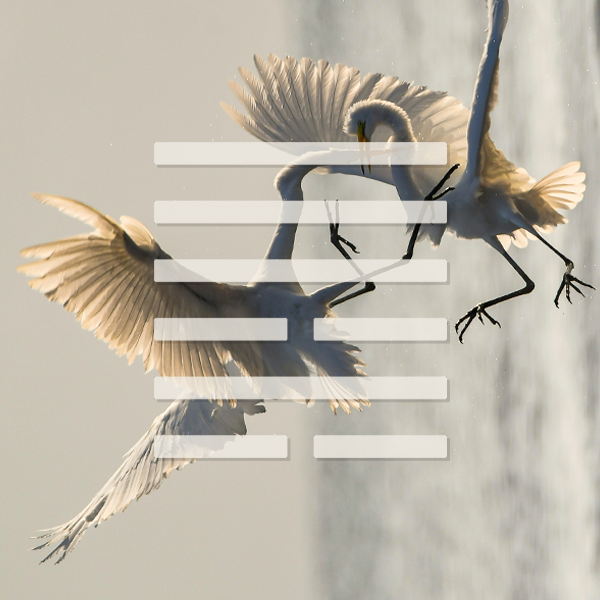
The Oracle acknowledges that you may be acting from a place of “sincere motivation” or absolute truth. However, being in the right does not guarantee a smooth path. When you find yourself blocked by external resistance, the I Ching warns against trying to force an outcome.
The Strategy of the Halfway Halt: Sòng explicitly counsels that the only way to secure a favorable outcome in a balanced dispute is to compromise and stop halfway. Prosecuting a conflict to its bitter end—even if you believe you are completely justified—will only attract exhaustion, resentment, and disaster.
The Role of the Arbiter: It is highly beneficial to “see the Great Man”. This represents seeking out an objective, wise, and impartial third party or looking to your own higher Self to mediate and dissolve the conflict.
The Warning Against Hazardous Ventures: Because Water (danger) is below, the Oracle warns that it is not a time to “cross the great stream”. Avoid initiating major travel, high-risk business ventures, or life-altering transitions while the energy of conflict is active.